
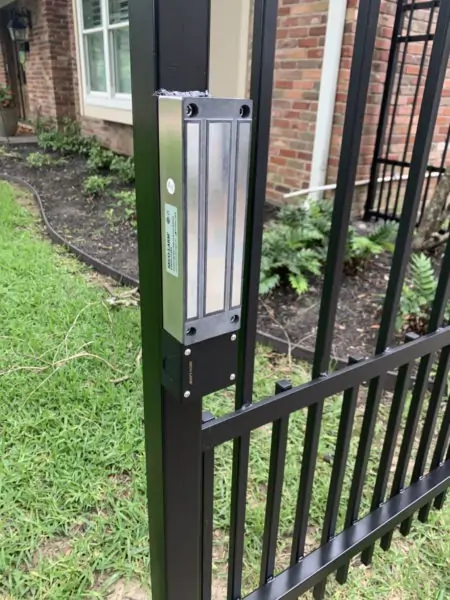
A magnetic lock — or “maglock” — secures a door or gate with a powerful electromagnet instead of a mechanical bolt. They are a staple of commercial access control because they are simple, extremely strong, and fail-safe. Here is what facility managers should know.
How a Maglock Works
A maglock has two parts: an electromagnet mounted to the frame and a steel armature plate on the door or gate. When energized, the magnet bonds to the plate with substantial holding force (commonly 600 to 1,200 pounds). Cut the power and it releases.
Fail-Safe by Design
Because a maglock unlocks when power is removed, it is inherently fail-safe — important for egress and life-safety code. In commercial installations it is tied to the fire alarm and a request-to-exit device so people can always get out.
Where Maglocks Fit
Maglocks are well suited to pedestrian man-gates, office and server-room doors, and controlled entries, paired with access control such as keypads, card or proximity readers, or a video intercom.
Integration Matters
A maglock has to be wired with the access-control and egress devices to code to be both secure and safe. Advanced Fences integrates maglocks and access control with commercial gates and entries. See our access control capabilities.